
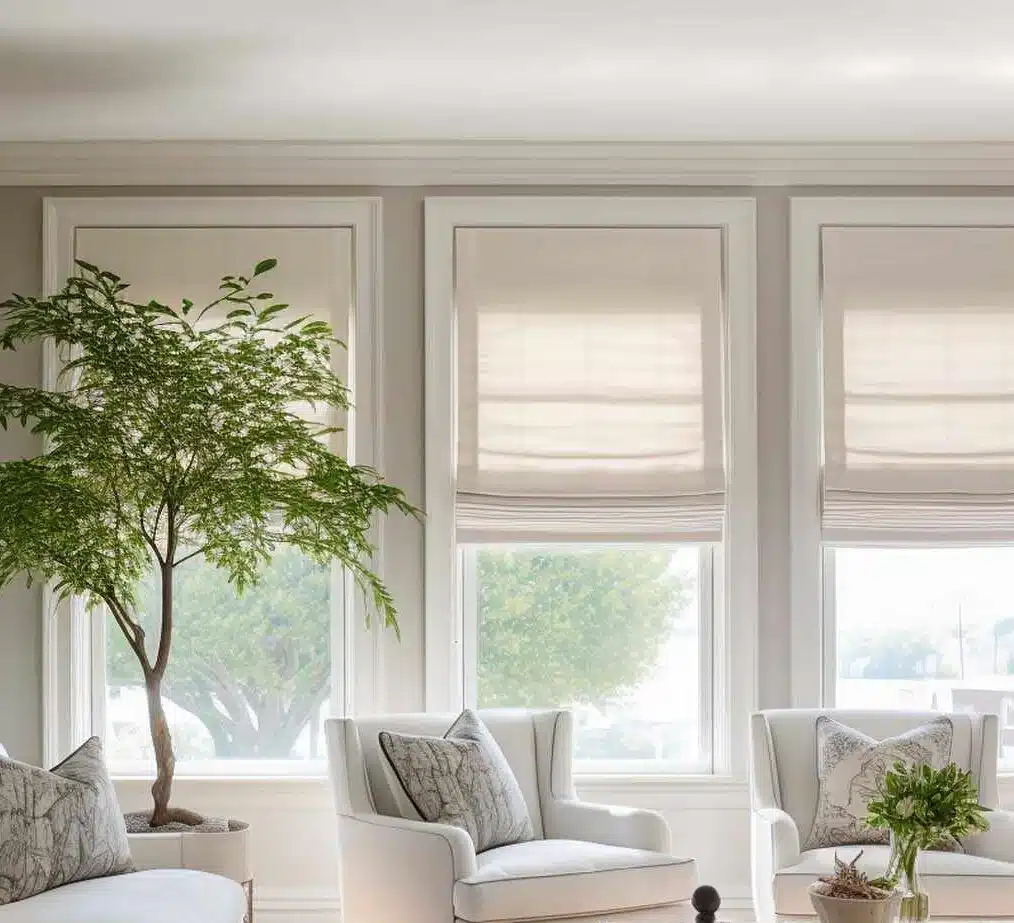
How to Choose the Right Roman Shades for Your Celina New Construction Home
If you just closed on a new home in Celina and those builder-grade windows are letting North Texas heat pour through, you need window treatments that balance style with serious climate control. Roman shades offer the tailored aesthetic that matches the upscale look of communities like Light Farms, Mustang Lakes, and Cambridge Crossing, while providing the insulation your bare windows currently lack. The best fabric choice for your home depends on three factors: how much light control you want, whether the room faces direct sun exposure, and the ceiling height and window shape in each space.
Made in the Shade North Dallas Fort Worth works with Celina homeowners daily who face this exact decision. Your new construction home likely features tall ceilings and oversized specialty-shaped windows that require custom sizing, not off-the-shelf solutions that gap at the edges. Understanding the trade-offs between different roman shade fabrics helps you make a choice that keeps your home comfortable year-round while complementing your interior design.
Comparing Roman Shade Fabric Options for North Texas Conditions
Every fabric type performs differently against the temperature extremes that define this region. Summer afternoons in Celina can push well past 100 degrees, while winter mornings occasionally dip below freezing. Your windows are the weakest link in your home’s thermal envelope, and the right fabric can significantly reduce how hard your HVAC system works.
Light-Filtering Fabrics
Light-filtering roman shades soften incoming sunlight without blocking it entirely. These fabrics work beautifully in north-facing rooms or spaces where you want natural illumination throughout the day. In a Light Farms home with a two-story living room, light-filtering shades on the upper clerestory windows maintain brightness while cutting glare on screens and furnishings.
The trade-off is thermal performance. Light-filtering fabrics provide modest insulation, making them better suited for rooms that do not receive direct afternoon sun. They excel in bedrooms where you want gentle morning light and in kitchens where you need visibility without harsh shadows.
Room-Darkening Fabrics
Room-darkening options block most incoming light while adding a heavier layer between your interior and the outdoor temperature. These fabrics suit media rooms, nurseries, and bedrooms where sleep quality matters. Many Mustang Lakes homes feature master suites with large west-facing windows that catch intense late-afternoon sun, making room-darkening shades a practical choice for comfort and energy savings.
These fabrics typically feature a backing layer that improves their insulating properties. You will notice less heat radiating from the window during summer peaks, which directly affects your CoServ Electric bill when your system is not fighting a constant influx of thermal energy.
Blackout Fabrics
Blackout roman shades eliminate light penetration entirely when closed. Beyond their obvious benefit for shift workers or light-sensitive sleepers, blackout fabrics provide the strongest thermal barrier in the roman shade category. The complete opacity comes from multiple fabric layers or specialized coatings that stop both light and heat transfer.
For south-facing and west-facing windows in Cambridge Crossing homes, blackout fabrics can noticeably reduce solar heat gain during peak summer months. The initial investment pays back through reduced energy consumption over time.
Fabric Comparison for Celina Homes
| Fabric Type | Light Control | Heat Reduction | Best Room Use |
|---|---|---|---|
| Light-Filtering | Moderate (softens glare) | Minimal to moderate | Living rooms, kitchens, north-facing windows |
| Room-Darkening | High (blocks most light) | Moderate to good | Bedrooms, media rooms, west-facing windows |
| Blackout | Complete (no light penetration) | Good to excellent | Nurseries, shift-worker bedrooms, south/west exposure |
Specialty Window Solutions for New Construction in Celina
The architectural style dominating Celina’s master-planned communities creates specific challenges for window treatments. Tall ceilings mean windows that extend well beyond standard dimensions. Arched transoms, angled tops, and oversized picture windows appear throughout Light Farms, Mustang Lakes, and Cambridge Crossing floor plans.
Custom Sizing for Tall and Wide Windows
Standard roman shades max out at certain widths and drops. Your new construction home likely includes windows that exceed these limitations. Made in the Shade North Dallas Fort Worth provides professional measurement to determine exactly what custom fabrication your windows require. This precision matters because roman shades that are even slightly too narrow will leave light gaps at the edges, undermining both their appearance and function.
Two-story foyer windows and great room walls of glass need motorized operation for practical daily use. Reaching a 15-foot window with a manual cord is neither safe nor convenient. Motorized roman shades integrate with smart home systems, allowing you to control light and privacy from your phone or through voice commands.
Specialty Shapes and Angles
Arched windows, trapezoid transoms, and angled tops require fabrication expertise beyond standard rectangular shades. Some homeowners opt to leave transom windows untreated for ambient light while covering the operable portion below. Others want complete coverage for maximum light control. Either approach works, depending on the room’s orientation and your privacy needs.
The key is professional assessment before ordering. Your window measurements, ceiling height, and architectural details all factor into the right solution. Attempting to fit stock sizes into custom openings results in visible gaps and poor thermal performance.
Color and Pattern Selection for North Texas Interiors
Roman shades occupy significant visual real estate in your room. The fabric you choose becomes part of your interior design, not just a functional covering. Celina new construction tends toward open floor plans where window treatments are visible from multiple angles and sightlines.
Coordinating with Builder Finishes
Most new builds in Celina come with neutral wall colors, light-toned flooring, and grey or white trim. This creates a flexible canvas for roman shade fabrics in nearly any palette. Warm neutrals like taupe, linen, and cream complement the existing finishes without competing. Bolder choices in navy, sage, or terracotta add personality and can tie together accent furniture and accessories.
Consider the view from your most-used spaces. In an open-concept layout, the shades you select for your great room windows will be visible from your kitchen, dining area, and entry. Coordinating these treatments creates a cohesive look throughout the main living areas.
Pattern and Texture Considerations
Solid fabrics offer timeless versatility and typically cost less than patterned options. Textured solids, such as linen weaves or subtle jacquards, add visual interest without overwhelming a room. Patterned fabrics work well in spaces with otherwise simple furnishings, where the roman shades can serve as a focal point.
- Solid neutrals: versatile, timeless, easy to update surrounding decor
- Textured weaves: visual depth without busy patterns
- Geometric prints: modern aesthetic, pairs well with contemporary furniture
- Soft stripes: traditional feel, elongates the appearance of windows
Installation Timing for New Construction in Celina
Celina ranks among the fastest-growing cities in Texas, with new homes completing construction weekly across Light Farms, Mustang Lakes, Cambridge Crossing, and other communities. Many buyers discover they need window treatments immediately after closing because builder-standard windows come without any coverings.
Why Immediate Coverage Matters
Beyond privacy concerns, uncovered windows in a new Celina home create several problems. Your HVAC system runs constantly to compensate for solar heat gain. UV exposure begins fading flooring, furniture, and finishes from day one. And without window treatments, your home feels unfinished despite all the work you put into selecting finishes and furnishings.
Scheduling your consultation before closing allows time for fabric selection, custom fabrication, and installation shortly after you move in. The process typically takes several weeks from measurement to installation, so starting early ensures you are not living with bare windows longer than necessary.
What to Expect During Your Consultation
A consultation with Made in the Shade North Dallas Fort Worth includes in-home measurement of every window, discussion of your light control and privacy preferences room by room, fabric sampling so you can see materials against your actual walls and flooring, and a complete quote for custom fabrication and professional installation.
- Precise measurement of each window, including specialty shapes
- Discussion of operation preferences (manual, cordless, or motorized)
- Fabric selection with samples in your actual lighting conditions
- Transparent pricing with no hidden fees
The right roman shade fabric depends on your specific windows, your lifestyle, and how each room functions in your daily routine. There is no single best choice for every Celina home, which is why professional guidance makes such a difference in the final result.
The Best Choice for Most Celina New Construction Homes
After working with homeowners throughout the North Dallas Fort Worth area, the recommendation for most Celina new builds is room-darkening roman shades in bedrooms and light-filtering fabrics in living spaces. This combination addresses the practical realities of North Texas weather while maintaining the soft, natural light that makes new construction feel welcoming.
For south-facing and west-facing windows that take direct sun, consider upgrading to blackout fabrics. The additional thermal protection justifies the investment, especially when you factor in reduced CoServ Electric costs over years of ownership. In rooms with specialty-shaped windows or heights beyond comfortable reach, motorized operation transforms roman shades from a static feature into a responsive part of your daily comfort.
Whether your new home sits near Old Celina Park, within walking distance of Historic Downtown Celina, or in the heart of one of the city’s growing master-planned communities, custom roman shades provide the tailored finish your windows deserve. Contact us today for your complimentary Celina new home window treatment consultation and fabric selection. Call Made in the Shade North Dallas Fort Worth at (940) 600-1321 to schedule your in-home appointment.
Frequently Asked Questions
How long does it take to get custom roman shades installed in a new Celina home?
The timeline from initial consultation to completed installation typically runs several weeks. This includes professional measurement, fabric selection, custom fabrication, and scheduling installation. Starting the process before or immediately after closing helps ensure your windows are covered shortly after you move in rather than weeks later.
Can roman shades be made for arched or specialty-shaped windows in Celina master-planned communities?
Yes, roman shades can be custom fabricated for arched transoms, angled tops, trapezoid shapes, and other specialty configurations common in Light Farms, Mustang Lakes, and Cambridge Crossing homes. Some homeowners choose to treat only the rectangular portion of the window while leaving the architectural detail uncovered, while others prefer full coverage for maximum light control.
Are motorized roman shades worth the investment for new construction?
For windows that extend beyond comfortable reach, particularly in two-story foyers, great rooms with tall ceilings, and stairwell walls, motorized operation provides daily convenience that manual options cannot match. Motorized shades also integrate with smart home systems for scheduled adjustments and voice control, making them especially practical in homes with multiple hard-to-reach windows.
What fabric opacity works best for bedrooms facing west in Celina?
West-facing bedrooms receive intense late-afternoon sun during summer months. Room-darkening or blackout fabrics provide the best combination of light control and heat reduction for these exposures. The additional thermal barrier helps your bedroom stay cooler and reduces strain on your HVAC system during peak heat hours.

